How Long Does a Demolition Project Take in London?
May 11, 2026
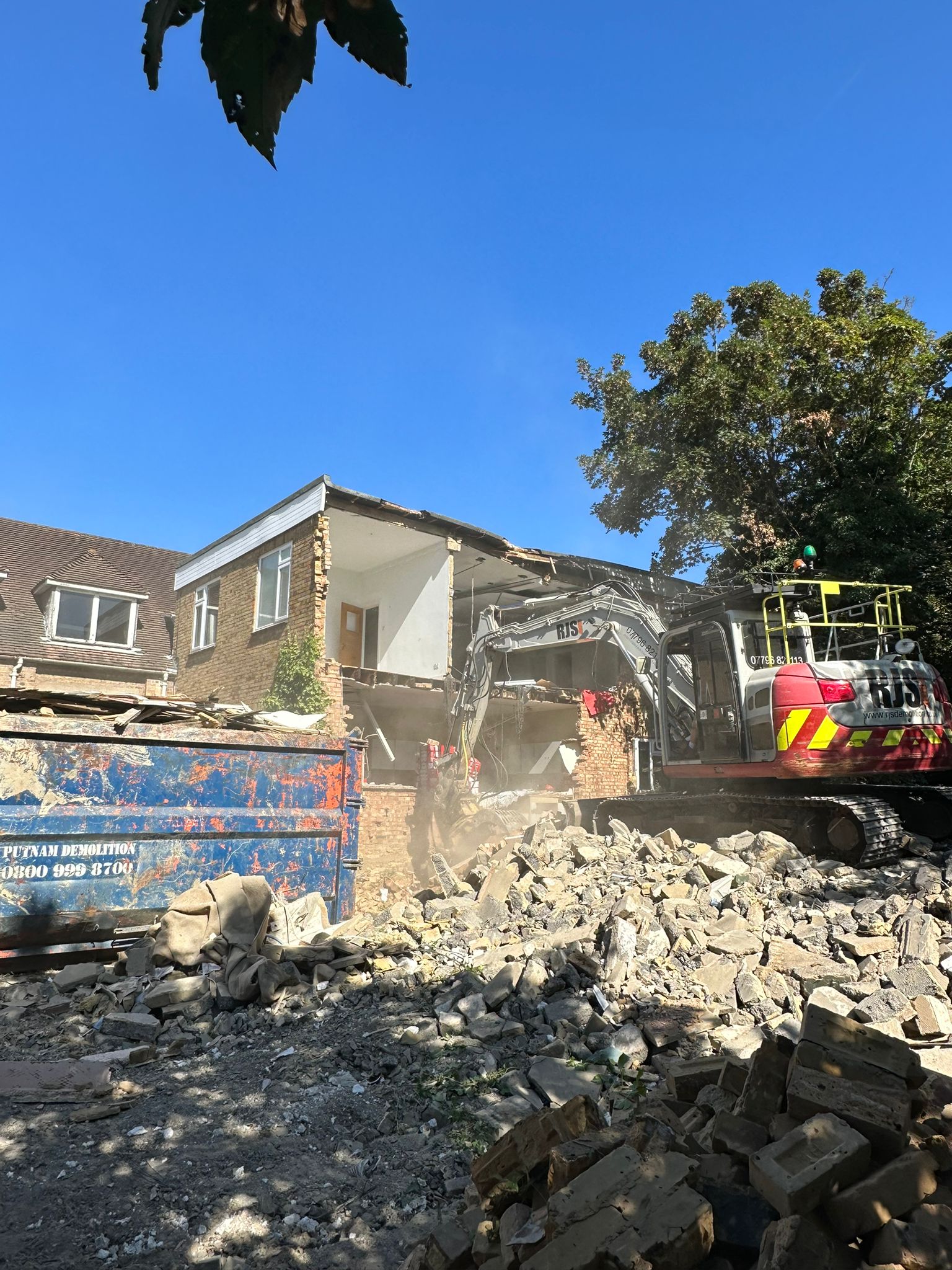
One of the most common questions people ask before starting a demolition project is how long it's going to take. And it's a fair question, because the timeline affects everything else. Your build schedule, your contractor bookings, your budget.
The honest answer is that it varies quite a bit. A small garage can be down and cleared in a day. A full house demolition in a dense London street can take several weeks by the time you factor in everything that needs to happen before a single wall comes down.
Here's what actually drives the timeline.
The size and type of structure
This is the most obvious factor. Bigger buildings take longer. But it's not just about size. The construction type matters too. A timber framed structure comes down faster than reinforced concrete. A brick built Victorian terrace takes more careful handling than a modern build, especially if you're in a terrace row where the adjoining properties need to stay standing.
As a rough guide:
A garden outbuilding or garage is usually a one day job. Two at most if access is tight.
A single storey extension typically takes two to four days to demolish and clear.
A full two or three bedroom house is generally five to fifteen working days depending on access, construction type, and what's found during the strip out.
Larger commercial or industrial buildings are quoted and managed on a project by project basis. These can run for several weeks or months.
What happens before the physical demolition
This is the part people underestimate most. In London, the prep work before anything comes down can take longer than the demolition itself.
First, there's the planning stage. If prior approval is needed from the council, you're looking at up to 28 days for a decision once the application is validated. You can't start work until that comes through.
Then there's the asbestos survey. Any building constructed before 2000 legally requires a survey before demolition begins. A standard survey takes a few days to arrange and a few more for the lab results to come back. If asbestos is found and needs removing, that's a specialist job that adds time before the main contractor can start.
Service disconnections also need to happen before demolition. Gas, electricity, and water all need to be properly capped and signed off by the relevant providers. In London, getting a date from a utility company can take two to four weeks. It's one of those things that catches people out because it sits outside the contractor's control entirely.
Access in London
London sites add complications that you wouldn't have elsewhere. Narrow streets, neighbouring buildings, shared driveways, and parking restrictions all affect how quickly work can move.
If a large excavator or high reach machine needs to come in, the contractor may need to arrange a road closure or crane permit. In some London boroughs that process alone can take one to two weeks to organise.
Skips and lorries need somewhere to park while they're being loaded. On a main road that might mean a skip permit from the council, which takes a few days to arrange and isn't always granted immediately.
Working hours restrictions also apply in most London boroughs. Noise from demolition is typically restricted to Monday to Friday, 8am to 6pm, and Saturday 8am to 1pm. No work on Sundays. This extends the overall programme compared to sites elsewhere.
Asbestos removal
If the survey finds asbestos, it changes the programme significantly. Licensed asbestos removal contractors work under strict conditions. The area has to be sealed, air monitoring takes place throughout, and a clearance certificate is issued before anyone else can enter.
Depending on the volume and type of asbestos, removal can take anywhere from one day to two weeks. You can't fast track it. The process is what it is.
Soft strip before structural demolition
On most larger projects, especially house demolitions, a soft strip happens before the main demolition. This means removing everything that can be taken out by hand first. Kitchens, bathrooms, ceilings, internal doors, pipework, wiring. This reduces the volume of mixed waste going into skips and makes the structural demolition quicker and cleaner.
A thorough soft strip on a three bedroom house typically takes three to five days.
A realistic timeline for a full house demolition in London
If you're planning to demolish a house in London and start a new build, here's a realistic picture of the full timeline from decision to cleared site:
Planning and prior approval: two to four weeks.
Asbestos survey and results: one to two weeks, running alongside planning.
Utility disconnections: two to four weeks, often the longest single wait.
Asbestos removal if required: one to two weeks.
Soft strip: three to five days.
Structural demolition and clearance: five to ten days.
In total, from the point of making decisions and submitting applications, you're looking at six to twelve weeks before the site is clear and ready for the next phase. Some projects move faster if everything lines up. Others take longer if any one of those steps runs into delays.
What causes delays
A few things come up repeatedly on London demolition projects.
Utility companies taking longer than expected to disconnect services is the most common one. It's worth contacting them as early as possible, even before the contractor is booked.
Unexpected finds during the soft strip. Asbestos that wasn't identified in the initial survey, hidden voids, or structural issues that change how the demolition needs to proceed.
Weather. Demolition is outdoor work. Extended wet or windy periods slow things down, particularly on taller structures where working at height becomes unsafe.
Neighbour disputes or party wall complications. If a neighbour contests the party wall notice, an agreed surveyor process takes time to resolve.
How to keep your project on track
Start the planning and survey process before you book the contractor. These things run in parallel and getting them underway early removes the biggest sources of delay.
Contact utility providers as soon as you know demolition is planned. The earlier you request disconnection, the sooner you get a date.
Get a detailed programme from your contractor before work starts. It should show each phase, who's responsible for what, and where the dependencies are.
Build in contingency. On a six week programme, assume eight. On a ten week programme, assume twelve. London projects rarely run exactly to plan, and having buffer built in means a delay doesn't immediately derail everything else.
The bottom line
A small demolition in London can be done and dusted in a couple of days. A full residential demolition, done properly and legally, is more likely to take two to three months from first decision to cleared site once you account for all the steps involved.
The physical knocking down is often the quickest part. It's everything either side of it that takes the time.
Frequently Asked Questions
How long does a house demolition actually take once work starts?
The physical demolition of a standard two or three bedroom house is usually five to ten working days. That's the structural work and clearance combined. The weeks before that, surveys, disconnections, planning, are what extend the overall timeline.
Can I speed up the utility disconnection process?
Not really. The timelines are set by the providers, not the contractor. The best thing you can do is contact them as early as possible, ideally as soon as you know demolition is planned. Leaving it until the contractor is booked is where most people lose time.
Do I need an asbestos survey even if the building looks fine?
Yes. Asbestos isn't visible to the naked eye in most cases. If the building was constructed before 2000, a survey is a legal requirement before demolition starts. Looking fine has nothing to do with it.
Can demolition work happen on weekends?
In most London boroughs, Saturday working is allowed between 8am and 1pm. Sundays are generally off limits. Some boroughs are stricter than others, so it's worth checking the specific rules with your contractor before assuming weekend work is possible.
What is a soft strip and do I always need one?
A soft strip is the manual removal of everything inside a building before the structural demolition begins. Kitchens, bathrooms, floors, ceilings, wiring, pipework. It's not always legally required but it's standard practice on most house demolitions. It reduces waste, speeds up the main demolition, and makes the whole job cleaner.
What happens if my neighbour hasn't responded to the party wall notice?
If a neighbour doesn't respond within 14 days of receiving a party wall notice, it's treated as a dispute and an agreed surveyor is appointed to handle it. This adds time to the process, sometimes several weeks. Serving the notice early gives you the best chance of keeping the programme on track.
Can bad weather stop demolition work?
Yes. Working at height becomes unsafe in high winds, and prolonged wet weather can slow groundwork and clearance. It's not common for a whole project to be stopped by weather, but it can add days to the programme. Build some contingency in for this reason alone.