How to Plan a Demolition Project in 2026
August 2, 2026
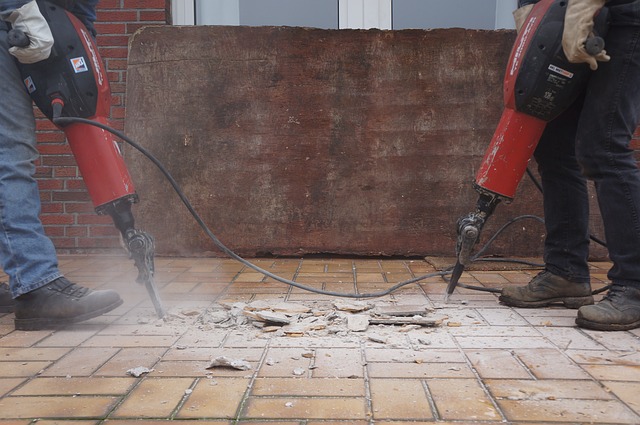
At first, arranging a demolition job seems simple, but things change when you get into the actual work. You might come across hidden asbestos, suffer delays due to utilities, encounter planning difficulties, or have a dispute with a neighbour over a party wall. Any one of these problems can add weeks and a large amount of money to a job which appeared straightforward in writing.
The guide is aimed at property owners, developers, and contractors who in 2026 want to carry out a demolition project and need a clear understanding of what is involved as well as how to avoid the most usual problems.
Start with what you've got
First of all, you should have a clear understanding of what is going to be demolished. Although this may seem obvious, it is precisely where most planning fails. Instead of focusing on what they want to build, people regard demolition as a simple initial task. It isn't.
You need to know:
- When the building was erected, any work prior to 2000 must be preceded by an asbestos survey.
- The building being a listed one or not, partial demolition of a listed structure necessitates listed building consent, this consent being a separate procedure from planning permission.
- The approvals you'll need and the amount of close examination your project will receive from the council will depend on whether you're in a conservation area.
- The things that are attached to or near the building, such as party walls, shared drains, adjacent structures, overhead cables, and underground services, have an impact on the way the job is planned and priced.
Collect all the relevant information before you talk to a contractor; this will save you time and make sure the quotes you get are based on the real situation and not on assumptions.
Get the survey done early
At the beginning of a demolition project two surveys are needed, namely the asbestos survey and the structural survey.
A asbestos refurbishment and demolition survey is legally required in respect of any building constructed before 2000, and it must be carried out before demolition can begin. It takes a few days for the results to be returned by the laboratory. In the event that asbestos is discovered, its removal must take place before the main demolition work starts, and when licensed asbestos work is carried out, 14 days' notice must be given to the HSE prior to the work beginning.
The structural survey shows exactly what you are working with—it tells you how the building has been constructed, where the loads are carried, its present condition, and whether there are any complications that influence the way the demolition has to be carried out. This is especially important on a crowded site in London since you have to know how removing one building affects the other structures nearby.
Carrying out both surveys early eliminates two of the main causes of delay and budget uncertainty for the project.
Understand what permissions you need
In England in 2026 the procedure for demolition is as follows: most cases do not require full planning permission but do need prior approval from the local council. You have to make the application, the council have 28 days in which to reply, and demolition cannot begin until a decision has been made or the 28 days have expired without one.
A prior approval is necessary in the case where the building has a cubic content exceeding 50 cubic metres or adjoins a highway, a waterway, or an open space. In practice, this applies to the vast majority of residential and commercial buildings.
Whether large or small, buildings that are listed require listed building consent. Those located in a conservation area are subject to extra examination. When your demolition is part of a larger development, the demolition is generally evaluated as part of the main planning application.
It's worth looking in 2026 to see if your property is located in an area where an Article 4 direction applies. Such directions eliminate permitted development rights in certain locations and are widely used in many of the London boroughs. In those cases where an Article 4 direction is in effect, development which usually would only require prior approval may instead have to be subject to a full planning application. It's important to consult your local planning authority before making an assumption.
Sort the utilities early
The step which causes the greatest delay is basically completely beyond your control after the project has started. Before demolition can begin, the gas, electricity, and water supplies all have to be properly disconnected and signed off by the appropriate providers. It is not possible to demolish a building while live services are still running to it.
The issue is that the utility companies determine their own timescales and they are not generally quick. In London it can take between four and six weeks to receive a confirmed date for disconnection after the first point of contact. While some providers are quicker and others are slower, none of them will accelerate the process just because your contractor has been booked.
As soon as you know that demolition is going ahead, you should get in touch with the utility companies. Don't wait until the contractor has been confirmed or until you have the planning approval. The sooner you contact them, the quicker you'll secure a date and the less chance there is of them causing the delay.
Understand the party wall position
The Party Wall Act comes into effect when the building you are bringing down forms a wall with an adjacent property or when the demolition will have an impact on a neighbouring building; you must give the neighbouring properties a party wall notice before work begins.
Neighbours have 14 days in which to reply; if they agree in writing then you may go ahead, but if they do not reply or object, a surveyor's procedure is started. This can extend the programme by several weeks and, in certain cases, may last longer if there is a real dispute.
It is important to serve the notices regarding the party wall as early as possible; in London, because properties are situated close to one another and neighbours are usually well aware of their rights, delaying this action is a common and avoidable cause of delay.
Choose the right contractor
In London the demolition industry is busy in 2026. There is a high demand for reliable contractors and their schedules get filled up. So, if you have a project that is to take place on a particular date, you should begin discussions with contractors earlier than you currently anticipate.
When assessing contractors, look for:
A contractor who uses their own team to carry out the work rather than hiring other people to do it. The fact that subcontracting is involved adds a stage of coordination which can have an effect on both the quality and the programme.
Evidence of the relevant accreditations; in this sector the main ones to look for are membership of Constructionline, CHAS and NFDC. Such memberships show that the contractor has been evaluated against established standards.
The quote should be clear and given in the form of separate items, with each of labour, machinery, waste disposal and any specialist work being listed individually; a single line quote does not show where the costs are or what is included.
A named project manager and a clear programRequest references from similar projects and then follow up on them.ule looks like before you sign anything.
References from comparable projects. Ask for them and follow them up.
Build a realistic programme
Here is a realistic timelinPlanning and prior approval: between two and four weeks.n 2026, from the point of making a decision to a cleared site:
Planning and prior approval: two to four weeks.
Asbestos survey and results: one to two weeks, running alongside planning.
Utility disconnections: four to six weeks, often the longest single wait.
Asbestos removal if required: one to three weeks depending on findings.
Party wall process: two to four weeks if served early, longer if disputed.
Soft strip: three to five days.
Structural demolition and clearance: five to ten working days.
All together, it should take ten to fourteen weeks from the time a decision is made until the site is cleared as a reasonable starting point. In some cases the projects progress more quickly. Those which involve complications, listed buildings, a large amount of asbestos, disputed party walls, or difficult access can take a lot longer.
The error that most people commit is to plan starting from the date by which they want the site to be clear rather than to plan from the date on which they need to begin the process. Firstly determine your desired completion date and then go backwards from that point. If the calculations don't add up, then you must either start earlier or modify your target date.
Manage the budget properly
The budgets for demolition have three parts: the basic demolition cost, the extra costs that are already known, and a contingency amount for those things which are not yet known.
The main component of the cost includes labour, machinery, the getting rid of waste, and clearing the site. This is the sort of thing that is included in most quotations.
Other expenses include the cost of the asbestos survey, the cost of asbestos removal if it is necessary, the fee for the party wall surveyors, the planning application fees, the costs associated with disconnecting the utilities, and any skip or road permits that may be required. Although these costs are foreseeable they are frequently omitted from the first budget talks.
The contingency should be at least ten to fifteen percent of the total. It is not uncommon for London sites to experience surprises when undergoing soft stripping and demolition. These can include unexpected structural conditions, asbestos that was not detected during the first survey, and underground obstructions. Having a contingency budget does not mean one is being pessimistic; it is a sign of good planning.
What's different in 2026
There are a few points that are worth mentioning in relation to projects this year.
The cost of getting rid of waste has gone up, the landfill tax in the UK still increasing each year and the cost of getting rid of mixed demolition waste is higher than it was two or three years ago. It is now necessary to select a contractor who has a good policy regarding recycling and waste management for both environmental and financial reasons.
Labour costs in London are up in keeping with the wage increases seen throughout the construction sector. If you are carrying out budget comparisons you should take account of this when using older estimates.
Sustainability requirements are becoming more important in both commercial and public sector projects. Nowadays, many planning authorities insist on having a pre-demolition audit carried out in order to discover the materials that can be recycled or reused before a building is brought down. In the case of a commercial project or one that is part of a bigger development, you should check if this requirement applies.
The bottom line
In 2026 a well thought-out demolition programme is simple: the building is brought down, the site is cleared, and the next stage then gets underway on schedule. This result is almost completely due to the amount of work carried out at the beginning.
Organise the surveys, contact the utility companies, serve the notices regarding the party wall, arrange the planning and select a contractor who handles the entire process. If you do all these things early on and in the correct order, most of the usual problems will not arise.